
BIGBEAR
PHARMACEUTICAL
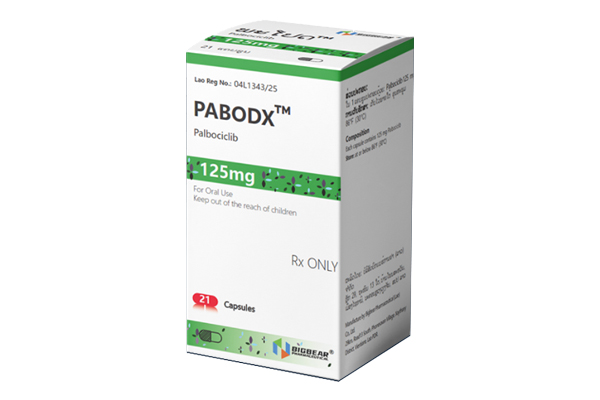
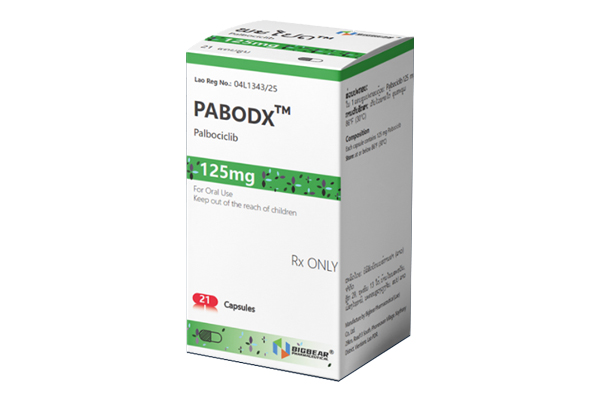
Palbociclib is the main component of breast cancer treatment medications and belongs to the class of cyclin-dependent kinase 4 and 6 inhibitors.

 AuthenticGuaranteeFast DeliveryPrivacy
 Palbociclib is specifically indicated for certain types of advanced breast cancer: locally advanced or metastatic breast cancer that is hormone receptor-positive (meaning cancer cell growth is influenced by hormones) and human epidermal growth factor receptor 2-negative (HER2-negative).
This drug is mainly suitable for two groups of patients with advanced breast cancer:
1.Patients diagnosed with hormone receptor-positive, HER2-negative locally advanced breast cancer via testing.
2.Patients with hormone receptor-positive, HER2-negative breast cancer that has metastasized.
This drug works by precisely interfering with the cell division process—normal cell division requires passing through the G1 phase of preparation before entering the S phase of DNA replication, and palbociclib can block the transition between these two phases.
When used in combination with estrogen-blocking drugs, this combination therapy can produce an effect greater than the sum of its parts (1+1>2). Specifically, the combined action of the two drugs significantly reduces the activity of the retinoblastoma (Rb) protein, which in turn affects the E2F signaling pathway that controls cell division, thereby inhibiting cancer cell growth more effectively than either drug alone.
It is important to note that it should be used in combination with aromatase inhibitors (a class of drugs that work by blocking estrogen production) as the preferred endocrine therapy option for postmenopausal female patients.
Since aromatase inhibitors require low estrogen levels to exert their optimal efficacy, premenopausal or perimenopausal (approaching menopause) women receiving palbociclib-based combination therapy must control estrogen through one of the following two methods:
1.Surgical removal of the ovaries;
2.Injection of luteinizing hormone-releasing hormone (LHRH) agonists (which temporarily shut down ovarian function via pharmacological action).
In clinical trials, when palbociclib was used in combination with fulvestrant (another endocrine therapy drug) in premenopausal women, all study data were based on treatment regimens that also included LHRH agonists.
Neutropenia is the most common adverse reaction during palbociclib treatment. Therefore, blood tests are required before the start of medication, on the first day of each treatment cycle, on the 15th day of the first two cycles, and whenever relevant symptoms occur. If a patient develops grade 3 or 4 severe neutropenia (meaning a significant reduction in the number of infection-fighting white blood cells in the blood), the doctor may recommend temporary discontinuation, dose reduction, or delay of the treatment cycle, along with enhanced monitoring.
Important reminder:
Individuals with a known hypersensitivity to the drug's components are prohibited from using it.
Pregnant women, breastfeeding women, couples planning pregnancy, patients with impaired liver or kidney function, and those who need to drive vehicles require special caution—use is generally not recommended. If the doctor assesses that medication is necessary, close observation of post-administration physical reactions is essential.
Patients taking other medications must inform their doctor of all current drugs and their medical conditions in advance.
Women who are planning to become pregnant, are already pregnant, or are breastfeeding must proactively inform their doctor of their situation.
The conventional dosing schedule is 125 mg taken orally daily, administered for 21 consecutive days followed by a 7-day break (known as the 3/1 dosing schedule), forming a complete 28-day treatment cycle.
If dose adjustment is required due to adverse effects, it will be reduced in three sequential steps: from 125 mg to 100 mg, then to 75 mg. Treatment must be discontinued if a dose below 75 mg is necessary.
Regular blood tests are essential during treatment, with the following schedule:
Before starting treatment: A baseline blood test is mandatory.
At the start of each treatment cycle: A blood test is required.
On day 15 of the first two cycles: A blood test is required.
As clinically indicated: Additional tests may be ordered by your doctor at any time.
For patients who experienced mild or moderate neutropenia (a reduction in white blood cells) during the first six months of treatment, blood tests should be performed every 3 months thereafter, as well as at the start of each new cycle and as needed.
To safely continue treatment, the following blood parameters must be met:
Absolute Neutrophil Count (ANC) ≥ 1,000/mm³ (an indicator of immune function).
Platelet count ≥ 50,000/mm³ (related to blood clotting function).
Maintain the original dose.
If detected on day 1 of the cycle: Withhold treatment until ANC recovers, then recheck one week later.
If detected on day 15 of the first two cycles: Continue treatment until the end of the cycle, then recheck on day 22.
If recovery takes longer than one week or neutropenia recurs: Consider dose reduction.
Withhold treatment until symptoms and blood counts resolve.
Resume treatment at a reduced dose once recovered.
Immediately discontinue treatment until blood counts and symptoms resolve.
Resume treatment at a reduced dose once recovered.
Mild to moderate liver impairment: No dose adjustment is needed.
Severe liver impairment: The recommended daily dose is 75 mg.
Renal impairment: No dose adjustment is required, provided the creatinine clearance rate is ≥ 15 ml/min.
Take with food: This ensures stable drug absorption.
Avoid grapefruit products: Do not consume grapefruit or grapefruit juice while taking this medication.
Swallow capsules whole: Do not chew, crush, or open the capsules. If a capsule is damaged, discard it and do not take it.
Fixed daily dosing time: Take the medication at the same time each day. If a dose is missed or vomiting occurs, do not take an extra dose; simply continue with the next scheduled dose.
Product information may vary between manufacturers. If there are discrepancies between this information and the package insert provided with your medication, please consult your doctor or pharmacist immediately for clarification.
During treatment with palbociclib, the following precautions must be observed:
This medication may reduce blood cell counts, thereby increasing the risk of infection. Therefore, you should be particularly vigilant for symptoms such as fever, chills, dizziness, and shortness of breath.
Take each dose at a fixed time daily. If you miss a dose on the same day, do not take an extra dose to make up for it.
In case of an overdose, which may cause nausea, vomiting, or blood-related problems, seek immediate medical attention.
Pay close attention to any changes in the appearance of the medication, such as color or shape. If abnormalities are detected, discontinue use immediately.
Store the medication in a safe place out of the reach of children.
Use is generally not recommended; in special cases, the doctor must assess the risks.
Breastfeeding must be discontinued during treatment.
Women should use contraception during treatment and for 3 weeks after stopping the drug; men should use contraception during treatment and for 14 weeks after stopping the drug.
Dosage reduction or extension of the medication interval is required:
Patients with moderate to severe liver disease: Slow drug metabolism may occur, leading to exacerbated adverse effects.
Patients with moderate to severe kidney disease: Impaired renal function can affect drug excretion.
No dosage adjustment is needed.
Safety and efficacy data are currently lacking.
Although the direct impact of the drug is minor, it may cause fatigue.
The following symptoms may occur, listed in order of decreasing frequency:
Immune system-related: Increased susceptibility to infections.
Hematological system: Leukopenia (especially neutropenia), anemia, thrombocytopenia, and fever associated with decreased white blood cell count.
Gastrointestinal tract: Oral ulcers, acid reflux, vomiting, and diarrhea.
Nutritional and metabolic: Decreased appetite.
Skin problems: Skin rash, hair loss, and dry skin.
Sensory abnormalities: Altered taste, blurred vision, excessive tearing, and dry eyes.
Respiratory system: Epistaxis (nosebleeds), and pneumonitis (which may cause cough or difficulty breathing).
General symptoms: Fatigue, weakness, and elevated body temperature.
Liver function: Elevated transaminase levels.
During treatment, it is critical to monitor your physical condition closely. Report any of the above symptoms to your doctor promptly. Your doctor may recommend monitoring vital signs such as blood pressure and heart rate to determine if treatment adjustment is needed.
Patients diagnosed with severe pneumonitis (interstitial lung disease) must permanently discontinue palbociclib. If you experience significant discomfort after taking the medication, seek immediate medical attention. Your doctor will decide whether to discontinue the drug or implement other.
If any issues arise, please contact us immediately.
Email:laosbigbear@gmail.com
If you skip a dose of palbociclib or experience vomiting shortly after taking a dose, do not administer an additional dose on the same day. Resume your next dose at your usual scheduled time.
In the event of an accidental overdose of palbociclib, contact your healthcare provider immediately or proceed directly to the nearest hospital emergency department.
Inform your healthcare provider about all medications you are currently taking, including prescription drugs, over-the-counter medications, vitamins, and herbal supplements. Palbociclib may interact with other medicinal products, potentially leading to adverse reactions. Be sure to specifically notify your provider if you are taking:
CYP3A inhibitors (e.g., clarithromycin, diltiazem, erythromycin, fluconazole, ketoconazole, verapamil): Concurrent use with palbociclib is not recommended. If a strong CYP3A inhibitor is unavoidable, your healthcare provider will adjust and reduce your palbociclib dosage.
CYP3A inducers (e.g., glucocorticoids, rifampin, carbamazepine, phenobarbital, phenytoin): Co-administration with palbociclib should be avoided.
CYP3A substrates (e.g., cyclosporine, tricyclic antidepressants, certain chemotherapeutic agents): Dosage reduction may be necessary for sensitive CYP3A4 substrates with narrow therapeutic windows when used together with palbociclib.
Additionally, grapefruit and grapefruit-containing products should be avoided.
Maintain a list of all your medications to share with your healthcare provider or pharmacist when starting a new treatment. This is not an exhaustive list of potential drug interactions with palbociclib. For a complete overview, refer to the official prescribing information for palbociclib.
Store palbociclib in its original blister pack at a temperature of 68°F to 77°F (20°C to 25°C).
Keep the medication out of the reach of children.
Copyright2024@ BIGBEAR All right reserved Bigbear | Bigbear Pharmaceutical | Bigbear Laos


